KLOW is an 80 mg blend of GHK-Cu, KPV, BPC-157 and TB-500. Its research context comes from separate ingredient studies; the combined formula has not been validated by the papers linked here.
Supplied formula · See the batch COA for measured results.
Identity & specification
Supplied formula: GHK-Cu 50 mg + KPV 10 mg + BPC-157 10 mg + TB-500 10 mg; total 80 mg. Declared catalogue specification; consult a matching batch report for measured results. TB-500 sequence and acetylation status remain unconfirmed; fragment and full-length thymosin beta-4 literature are not interchangeable.
Laboratory research only
Not for human or veterinary administration. Listed strength is a supplied specification; see the matching batch report for measured results.
Batch documentation
1 report is available for this strength. Match the batch number on your supplied material.
The supplied KLOW formula contains GHK-Cu 50 mg, KPV 10 mg, BPC-157 10 mg and TB-500 10 mg, totalling 80 mg. Ingredient research includes collagen synthesis in GHK-Cu-exposed fibroblasts, tendon-cell signalling with BPC-157, and targeted KPV delivery in cell and mouse models of intestinal inflammation. These are separate experiments, not tests of the four-component mixture. The precise TB-500 sequence also remains important: the name alone does not distinguish an acetylated thymosin beta-4 fragment from the full-length peptide. The catalogue lists the declared formula; its composition, compatibility and stability have not been independently established by these publications.
Supplied formula: GHK-Cu 50 mg + KPV 10 mg + BPC-157 10 mg + TB-500 10 mg; total 80 mg. Declared catalogue specification; consult a matching batch report for measured results. TB-500 sequence and acetylation status remain unconfirmed; fragment and full-length thymosin beta-4 literature are not interchangeable.
EXPLORE THE EVIDENCE
Studies & research references
These papers concern individual ingredients, not the finished blend. Each source identifies what was studied and the limits of its findings. Published research is separate from this product’s batch COA.
Fibroblast experiments measured collagen synthesis after GHK-Cu exposure. This is ingredient-level laboratory research; the investigators did not test the listed blend or a clinical skin outcome.
Researchers measured growth-hormone receptor expression and responses to growth hormone in tendon fibroblasts exposed to BPC-157. These cell experiments did not investigate this blend or demonstrate human tendon recovery.
KPV was studied in hyaluronic-acid-functionalised nanoparticles within a hydrogel, using cells and a mouse colitis model. Findings concern that delivery system, not unformulated KPV or the KLOW blend.
KLOW is currently listed in 80 mg. Select a strength above to see its price, product image and current stock. Listed quantities are supplied specifications, not measured batch results.
Is a COA available for KLOW?
1 laboratory report is published for this compound. Match the selected strength and available batch identifiers, and open the original document to check the actual test scope.
The supplied formula is 50 mg GHK-Cu + 10 mg KPV + 10 mg BPC-157 + 10 mg TB-500, totalling 80 mg. Ingredient studies do not establish the finished blend’s results. Check the original report for measured identity and quantities.
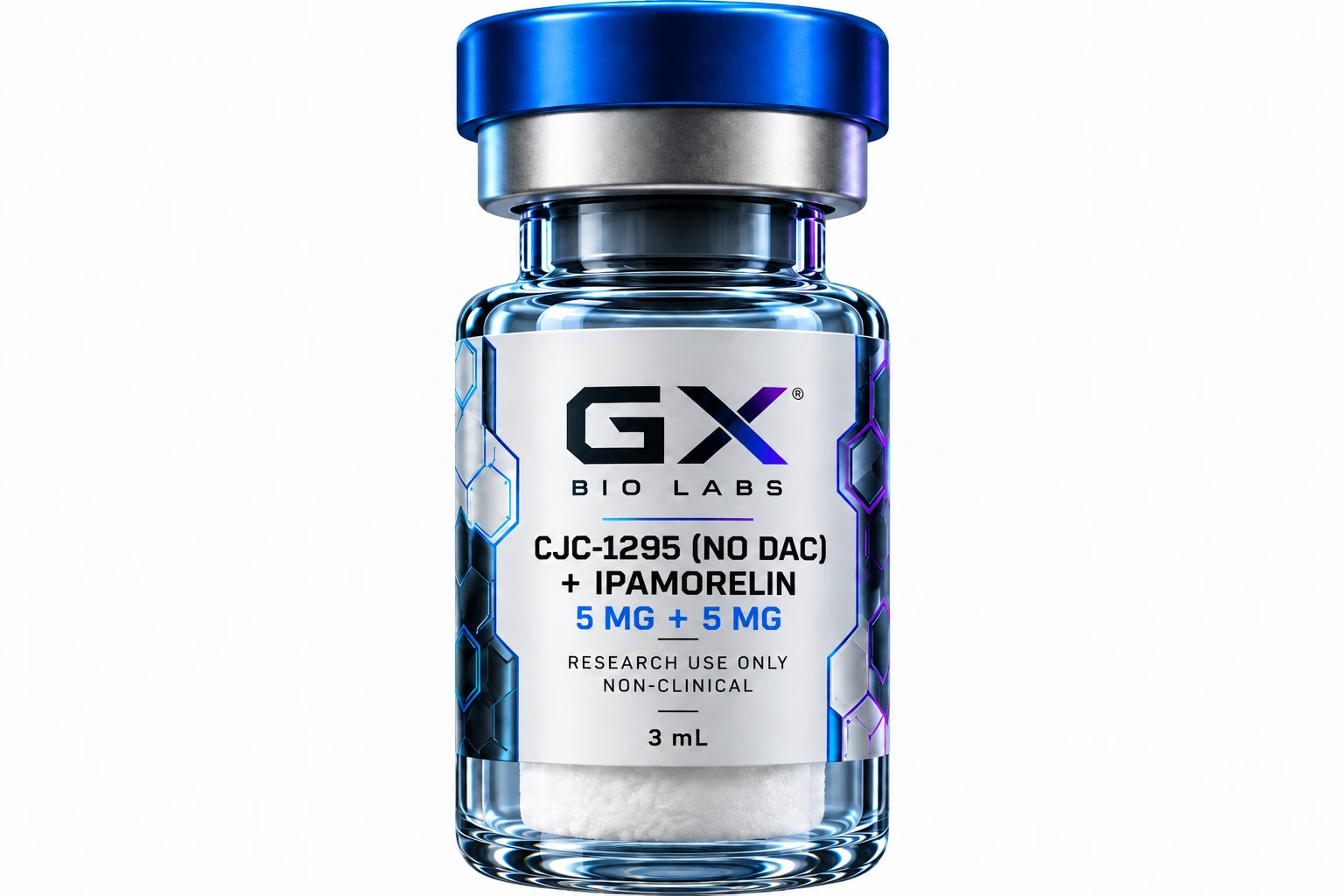
This listing combines CJC-1295 No DAC and ipamorelin at a stated 5 mg + 5 mg. The linked research concerns an individual component and does not test or validate the combined blend.